
Coordinates specialized agents in one operational layer.
Agent platform
What is an enterprise agent platform | i-Assistants
An enterprise agent platform coordinates specialized agents, tools, and operational context so teams can execute real work with more speed, traceability, and control than a standalone chatbot.
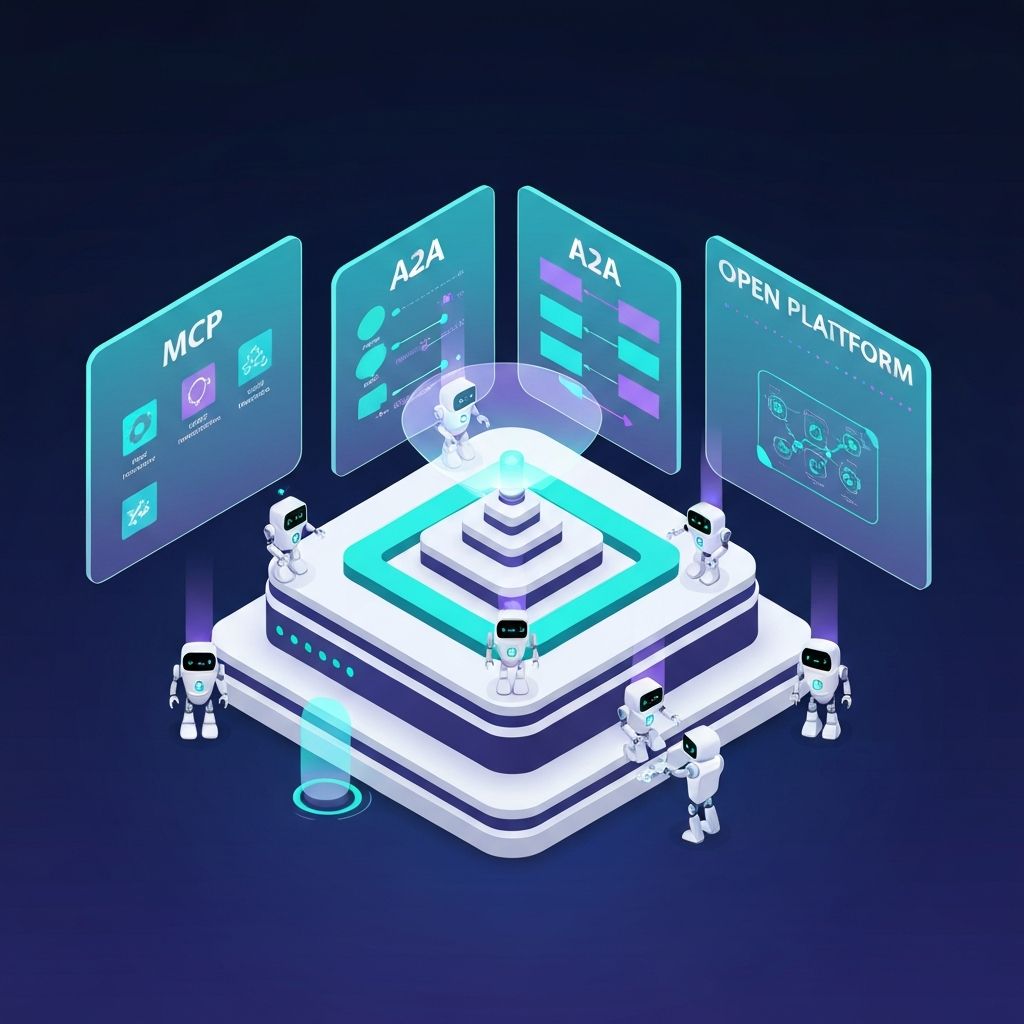
Integrates tools and business data through open protocols such as MCP.
Supports collaboration between agents through A2A.
How it differs from a traditional chatbot
A chatbot answers prompts. An agent platform structures tasks, delegates to specialists, and preserves continuity across systems, teams, and decisions.
That makes it better suited for enterprise support, process execution, and coordinated operations.
Why it matters in enterprise operations
Enterprise workflows are fragmented across tools, handoffs, and high-impact decisions that cannot lose context.
An agent platform reduces operational friction, improves execution quality, and scales without multiplying complexity.
Comparison
i-Assistants vs closed copilots
| Criteria | i-Assistants | Common alternative |
|---|---|---|
| Integration | Open MCP and API approach | Higher provider lock-in |
| Collaboration | A2A between agents | More closed or monolithic flows |
| Scalability | Phase-based adoption | Higher entry cost |
FAQ
Frequently asked questions
What does i-Assistants do?
i-Assistants connects agents, tools, and operational context so organizations can execute enterprise workflows with more control, speed, and traceability.
What does open platform mean here?
It means the platform can grow in stages and integrate new capabilities without being rigidly tied to one vendor stack.
Keep exploring
Related resources
Next step
Let us review which agents matter first in your operation
We can show you which agents to start with, how to connect them to your ecosystem, and where to capture value fastest.